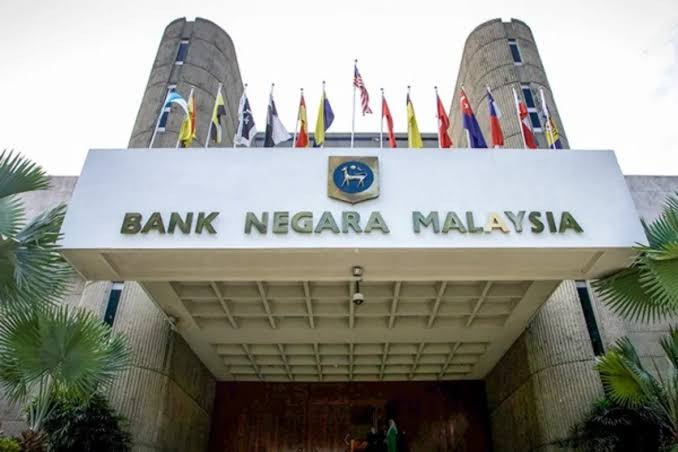
KUALA LUMPUR: Bank Negara Malaysia (BNM) is expected to keep the overnight policy rate (OPR) at 2.75% at its November meeting before raising it by 25 basis points to 3% in the first quarter of 2027 (1Q27), according to Kenanga Research.
Kenanga said the anticipated move would represent policy normalisation rather than the start of a new tightening cycle, with the central bank likely to keep the OPR at 3% thereafter for an extended period.
“We expect BNM to hold the OPR at 2.75% on November 5, then raise it once, by 25 basis points (bps) to 3.00%, in 1Q27 before a long hold,” Kenanga said in its Economic Viewpoint report today.
It said Malaysia’s economic growth had outlasted the risks that prompted BNM’s pre-emptive OPR cut in July 2025, with gross domestic product expanding 5.7% in the first half of 2026.
Growth reached 6% in the second quarter, supported by stronger-than-expected exports and sustained domestic demand, while inflation remained relatively benign, with headline and core inflation at 1.9% and 1.7% respectively in August.
“Neither inflation nor financial imbalances call for tighter policy,” Kenanga said, adding that BNM was likely to raise rates because economic conditions allowed it rather than because of pressure to do so.
The research house noted that household debt remained high at RM1.73 trillion, equivalent to 84.4% of gross domestic product (GDP) at end-1Q26, but argued that the level did not point to a developing financial imbalance.
Household debt grew 5.6% in 2025, broadly in line with its pre-pandemic average, while the debt-to-GDP ratio had declined 8.4 percentage points from its pandemic peak over the five years to 2025.
“The economy is outgrowing its debt, which leaves no imbalance for BNM to lean against,” it said.
Kenanga said the Federal Reserve’s interest-rate path had prompted it to bring forward the timing of its BNM call, rather than changing its view of the central bank’s mandate.
The Fed raised rates to between 3.75% and 4% in September, and Kenanga expects another 25bps hike in 4Q26. However, it pointed out that BNM had previously maintained a substantial policy-rate gap with the Fed, indicating that domestic economic conditions remained the key consideration.
“Growth gives BNM the licence to act; the Fed sets the clock by raising the cost of staying at an insurance-level OPR,” Kenanga said.
Its BNM decision model places the probability of a rate hike by end-1Q27 at 80%, although Kenanga’s own forecast is more cautious at 55%, partly because BNM has yet to signal concerns over financial imbalances.
Kenanga also sees limited scope for a second hike next year, saying a move beyond 3% would require a significant rise in core inflation following subsidy reforms.
“For November, our 15% sits below our next-meeting model’s 20% (30% with global inputs) and market pricing of about 20%,” it said.
On financial markets, Kenanga raised its end-2026 US dollar-ringgit target to 4.00 from 3.95, saying another Fed hike could slow the ringgit’s appreciation but was unlikely to reverse its broader trend.
It maintained its end-2026 10-year Malaysian Government Securities yield forecast at 3.88%, noting that the front end of the bond market had already largely priced in a rate hike in the first half of 2027.