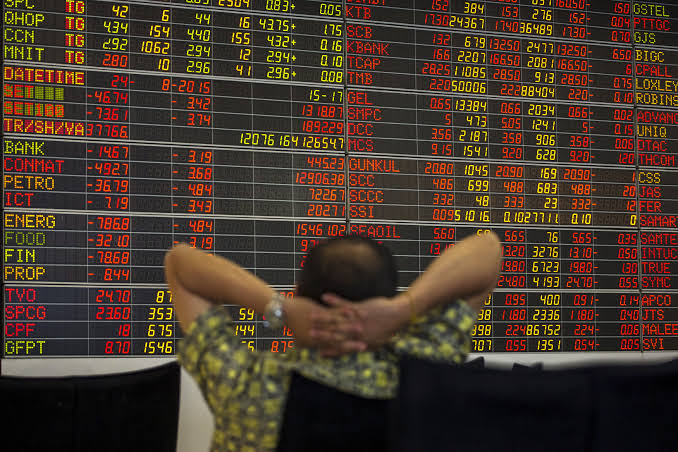
KUALA LUMPUR: Asian equity markets were heading for a sharp retreat on Friday as concerns over potential tighter regulation of the artificial intelligence (AI) industry triggered a broad selloff in US technology stocks, particularly semiconductor companies.
Futures for South Korea and Taiwan, both major semiconductor manufacturing hubs, fell at least 7%, while Japan's futures declined nearly 6%. Those for Australia and Hong Kong indicated more moderate losses, according to a Bloomberg report today.
The selloff followed a steep overnight decline on Wall Street, where the S&P 500 plunged 4.4%, its worst single-day performance since the April 2025 tariff turmoil. The Nasdaq 100 tumbled 6.4%, wiping out about US$2.3 trillion in market value and recording its biggest daily drop since March 2020.
A closely watched semiconductor index fell 12%, with Nvidia Corp, Qualcomm Inc and Arm Holdings among the biggest losers. Tesla Inc and SpaceX also declined more than 9%.
The latest weakness reflects growing investor concerns that the Democrats' midterm election gains could lead to tighter oversight of the AI and data-centre industries, potentially affecting investment plans and earnings prospects across the technology supply chain.
Michael O'Rourke of JonesTrading said the anticipated slowdown in data-centre development could undermine earnings estimates that had supported elevated technology valuations.
Investors were uncertain about the extent of potential earnings revisions, prompting them to reduce exposure until greater clarity emerges, he said.
In Asia, Samsung Electronics, SK Hynix and Taiwan Semiconductor Manufacturing Co have been among the hardest hit by the AI-related retreat. Hong Kong equities, however, have benefited from investors shifting funds away from AI-linked stocks towards relatively undervalued Chinese internet companies.
The risk-off mood also drove demand for safer assets, lifting US Treasuries and the dollar. The yield on the two-year Treasury note fell 12 basis points to 4.46%, while gold advanced for a second consecutive session. Bitcoin declined.
Investors are also awaiting the US non-farm payrolls report for further indications of the labour market's health and the Federal Reserve's interest-rate outlook.
Separately, Cleveland Federal Reserve president Beth Hammack said monetary policy should remain restrictive to bring inflation back to the central bank's target, adding that more frequent policy adjustments could reduce the risk of falling behind economic developments.