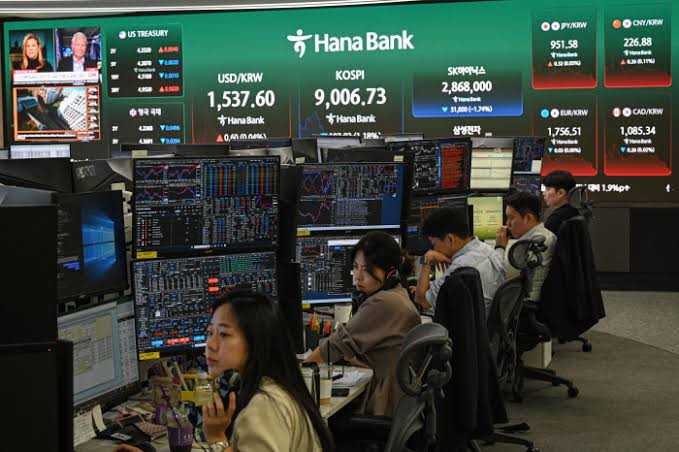
KUALA LUMPUR: Asian stock markets are expected to come under pressure today after stronger-than-expected US inflation data triggered a selloff on Wall Street and heightened expectations of further interest rate increases by the Federal Reserve.
Futures for equities in South Korea, Japan, Hong Kong and Australia pointed lower, while government bonds in Australia and New Zealand also declined in early trading. The US dollar strengthened and gold prices fell, as reported by Bloomberg.
On Wall Street, the S&P 500 ended its recent two-session winning streak, while the technology-heavy Nasdaq 100 declined 0.6%.
US consumer price index (CPI) data showed core inflation, which excludes food and energy, rose 0.3% in October from the previous month, exceeding market expectations for a third consecutive month. Headline CPI increased 0.4%, reflecting broader price pressures across essential goods and services.
The stronger inflation reading prompted investors to reassess the Federal Reserve's monetary policy outlook, sending US Treasury prices lower, particularly among shorter-dated bonds.
The yield on the two-year US Treasury note surged 17 basis points to 4.73%, its largest daily increase in 19 months.
Interest rate futures now indicate that investors are positioning for a 25-basis-point rate increase at the Fed's next meeting in December, with some anticipating the possibility of a larger adjustment. Markets are also pricing in approximately three quarter-point increases by June.
Dallas Fed President Lorie Logan said the central bank might need to raise rates more rapidly during the winter to bring inflation under control. Her comments followed those of Fed Governor Christopher Waller, who had suggested that a 50-basis-point increase in December could be warranted.
Goldman Sachs Asset Management's Lindsay Rosner said persistent inflation could prompt the Fed to pursue a more aggressive tightening cycle.
She said a December rate increase remained the firm's base-case expectation, adding that further increases in 2027 could not be ruled out if inflation remained stubborn.
The prospect of tighter monetary policy could complicate the recovery in equity markets, which have experienced volatility following the Democratic Party's gains in the US midterm elections.
The latest bond market selloff also reversed some of the gains recorded since early last month, when concerns about the sustainability of artificial intelligence-related investments weighed on technology stocks and prompted demand for government bonds.
Jeff Schulze, head of investment strategy at Franklin Templeton Institute, said the inflation reading posed a headwind for risk assets, as higher short-term bond yields and a stronger US dollar could weigh on equity valuations.
Meanwhile, investors continued to assess developments in the artificial intelligence sector.
Anthropic PBC is reportedly targeting a fully diluted valuation of US$1.4 trillion through its planned initial public offering, while CoreWeave Inc reported quarterly earnings above analysts' expectations and raised its full-year forecast, easing concerns about a potential slowdown in its debt-funded business.
SoftBank Group Corp will also be in focus after reporting a 1.12 trillion yen (US$7.1 billion) loss for its fiscal second quarter, following write-downs on non-refundable advance payments for its US data-centre projects.
In the commodities market, Brent crude fell for a second consecutive session to settle near US$92 a barrel amid expectations of further de-escalation in the conflict involving Iran.
Despite the recent pullback, Brent remains up almost 50% this year. However, prices have retreated sharply in November after reaching a six-month high, reflecting a significant shift in market sentiment.