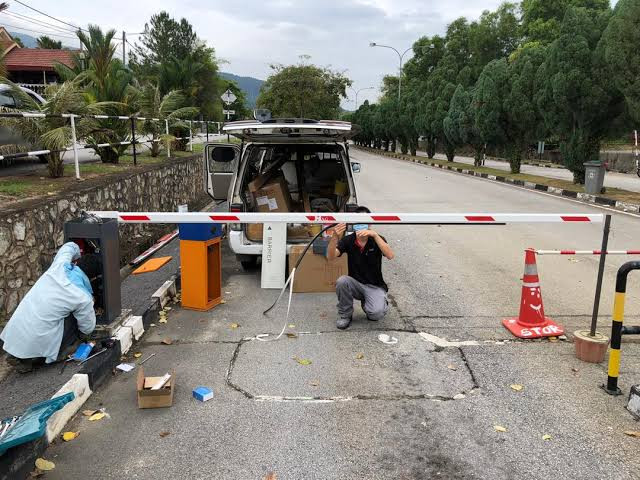
KUALA LUMPUR: The installation of boom gates and other security measures in guarded neighbourhoods must comply with local authority requirements, as residents' associations cannot restrict access to public roads without the necessary approvals.
The issue came into focus in September 2026 when Kuala Lumpur City Hall (DBKL) issued a final seven-day notice to the residents' association of Taman Desa Phase 1, Kuala Lumpur, to remove barriers and facial-recognition equipment installed on public roads without approval.
DBKL was also reviewing guarded neighbourhood schemes across the city, raising questions about the extent to which residents' associations can regulate access to their neighbourhoods, according to The Star.
While residents may contribute towards security fees and support measures to protect their homes, such arrangements do not automatically grant them the authority to restrict public access.
The distinction between gated and guarded communities is important in determining who has control over the roads.
In strata developments, internal roads and shared facilities generally form part of the common property managed by the relevant management body. However, installing gates and imposing access restrictions must still comply with applicable laws and approval requirements.
In conventional housing estates, roads are generally public. Residents may collectively engage security guards, but installing infrastructure such as guardhouses and boom gates requires approval from the local authority.
Obtaining residents' consent and collecting security contributions do not, by themselves, make unauthorised installations lawful.
Consent alone is not enough
The level of residents' support required also varies according to local authority rules.
In the Taman Desa case, DBKL reportedly required at least 81% residents' consent for a guarded neighbourhood scheme, while an automatic boom gate system using facial recognition required unanimous consent.
However, meeting the required consent threshold does not remove the need to obtain official approval for the installations.
The issue of access restrictions was also considered in the Federal Court case of Au Kean Hoe versus Persatuan Penduduk D'Villa Equestrian.
The dispute involved council-approved guardhouse and boom-gate structures, as well as a requirement for a resident who had not contributed towards security fees to operate the gates himself.
The Federal Court upheld the arrangement, distinguishing the inconvenience of having to open a gate from being denied access to the neighbourhood altogether.
The case highlights the importance of examining the specific circumstances and approvals governing each security scheme, rather than treating all boom-gate arrangements as unlawful or permissible.
Emergency access remains a concern
Beyond regulatory compliance, guarded neighbourhoods must also consider how their security arrangements affect emergency response.
A previous StarBiz 7 report, titled "Built for security, not emergencies", highlighted an incident at a strata development where emergency responders were reportedly delayed for about 45 minutes while security personnel waited for management approval to enter the premises.
The woman who suffered a cardiac arrest subsequently died.
Although the incident involved a strata development, it raises similar concerns for guarded neighbourhoods, particularly whether guards have clear instructions to immediately admit ambulances, fire engines and other emergency vehicles.
Security measures should not create unnecessary obstacles for emergency personnel seeking to reach residents in need.
Balancing security and residents' interests
The financial and administrative aspects of running a guarded neighbourhood can also become sources of disagreement.
Residents who contribute towards security services may question why non-paying neighbours enjoy the same benefits, while others may object to the fees, entry procedures or inconvenience caused by access restrictions.
Before implementing a scheme, residents' associations should establish the requirements imposed by their local authorities and ensure residents understand the proposed arrangements, including the costs and operating procedures.
They should also address practical issues such as system failures, power disruptions, visitor access and the procedures guards must follow during emergencies.
For prospective homebuyers, the presence of a guardhouse or boom gate should not be the only consideration when assessing a property's security arrangements.
Buyers should establish whether the scheme has the necessary approvals, what the security charges cover and how entry is managed.
Ultimately, effective neighbourhood security depends on more than physical barriers. Regulatory compliance, residents' support and clear operating procedures are equally important in ensuring that security arrangements protect residents without unnecessarily restricting access or delaying emergency assistance.