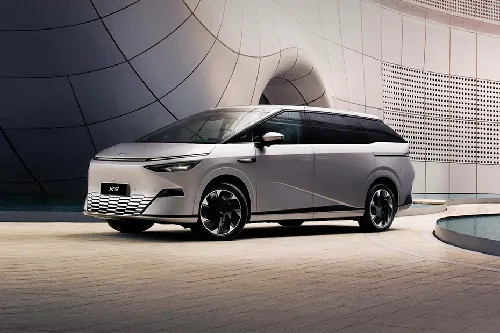
KUALA LUMPUR: Bermaz Auto Bhd has ceased its XPENG vehicle distribution operations in Malaysia following the Chinese electric vehicle manufacturer's plans to reorganise its local distribution network.
The automotive group said in a bourse filing yesterday that its 85%-owned subsidiary, Bermaz Xpeng Sdn Bhd (BXpeng), had stopped operating as the distributor with effect from Nov 16, 2026.
BXpeng had previously entered into distribution, warranty claims and other related agreements with subsidiaries of XPENG Inc, the vehicle marque owner and principal manufacturer, covering the distribution of vehicles, after-sales services and spare parts in Malaysia.
The agreements were originally due to expire in March 2027.
Bermaz said the parties were now finalising the terms for terminating the distribution agreements and other ancillary arrangements. A further announcement will be made once a separation agreement has been signed.
In the meantime, BXpeng will continue working with the parties involved to facilitate an orderly transition.
The group does not expect the cessation of BXpeng's distributorship to have any material financial or operational impact on its business for the current financial year.
Analysts however, said the group's earnings growth is expected to face pressure from the loss of its XPENG distributorship, with the group becoming increasingly dependent on Mazda to drive future performance, although strong demand for newer Mazda models could help cushion the impact.
RHB Research and CGS International (CGSI) Research both view the development negatively, as XPENG contributed approximately 27% of Bermaz Auto’s pretax profit in financial year 2026 (FY2026), highlighting the significance of the Chinese electric vehicle (EV) brand to the group's earnings.
However, both research houses remain positive on the group’s prospects, supported by Mazda’s sales momentum, attractive dividend yields and undemanding share valuation.
RHB Research maintained its "Buy" recommendation but lowered its target price to RM1 from RM1.15, while CGSI Research reiterated its "Add" call with a reduced target price of RM1.15.
The research outfits believe XPENG could move towards a principal-led business model, assuming greater control over local sales, after-sales services and distribution.
The departure will reduce Bermaz Auto’s exposure to the EV segment while increasing its earnings concentration risk, particularly following its exit from Kia distribution in 2025.
In the financial year ended April 2026, Bermaz Xpeng recorded revenue of RM311 million and pretax profit of RM47.3 million, representing a pre-tax margin of about 15%.
Nevertheless, Mazda remains the group's main earnings contributor, with the Mazda 3 and the newly introduced CX-5 providing support.
RHB Research noted that the Mazda 3 accounted for 61% of the brand's sales volume in the first quarter of FY2027, while the completely built-up (CBU) CX-5 had secured between 200 and 300 bookings.
CGSI Research estimated that Mazda averaged approximately 1,000 units in monthly sales in 2026, compared with about 130 units for XPENG. It also expects monthly CX-5 sales to reach around 400 units in October 2026, supported by deliveries of the new model.
The planned introduction of a locally assembled completely knocked-down CX-5 in 2027 could provide an additional boost to sales.
Bermaz Auto's market share has also improved to approximately 1.4% in the first nine months of 2026, from 1.1% in 2025.
On earnings, RHB Research expects the full-year impact of the XPENG exit to become more apparent from FY28, lowering its FY28 and FY29 earnings forecasts by 14% and 14.6%, respectively.
CGSI Research, meanwhile, reduced its FY27 to FY29 earnings projections by between 6% and 17%.
Despite the earnings adjustments, both research houses highlighted Bermaz Auto's attractive dividend prospects, with projected yields of about 9% to 10% for 2027.
They also cited the group's relatively undemanding valuation as a potential re-rating opportunity, provided Mazda sales remain resilient.
Key risks include weaker vehicle orders and deliveries, softer demand for Mazda models and intensifying price competition in the domestic automotive market.