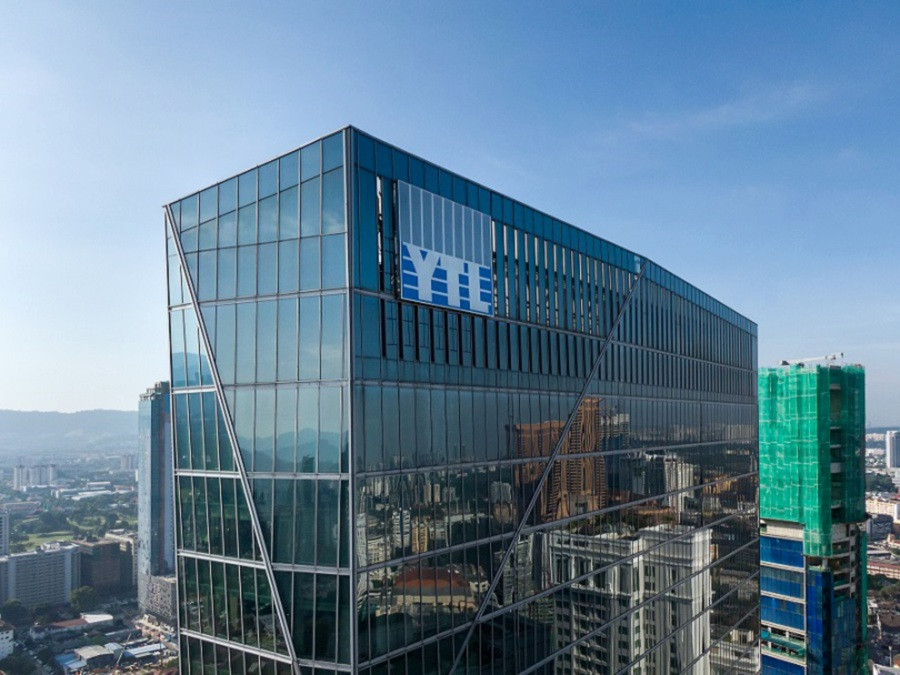
YTL Power: Stirred, not shaken, by a capital I for ignorance
Recently, a TikTok clip went viral after two women from China made the inaccurate claim that Malaysia was part of China.
The women did not make the statement out of hatred, racism or even for political mileage. Rather, it was simply a case of ignorance.
Ignorance can be a dangerous thing. So dangerous, in fact, that it can tear apart even a well-oiled company and leave it in shreds.
Ignorance is defined as the state or fact of being uninformed, uneducated or unaware. Simply put, it is a lack of knowledge, information or understanding about a particular subject, rather than a lack of intelligence.
Artificial intelligence (AI) categorises ignorance into three distinct forms:
Factual ignorance: Not knowing a specific fact.
Object ignorance: Being unacquainted with a particular object or thing.
Technical ignorance: Not knowing how to do something, or lacking the necessary skills or methods.
The only positive thing about ignorance is that it is curable. This is unlike stupidity, which implies a lack of intellectual capacity or an inability to process and apply knowledge effectively.
So, what does ignorance have to do with YTL Power International Bhd?
For starters, if one were to follow media reports, there appears to be a growing fear that YTL Power could somehow be entangled in the recent controversy involving Nvidia chips allegedly linked to Megaspeed International Pte Ltd.
Megaspeed International is a Singapore-based AI cloud computing and hosting provider at the centre of a US export-control investigation and a major corporate scandal involving Nvidia.
On Nov 16, 2026, the US Departments of Commerce and Justice jointly disclosed that their investigation, which began in 2024, involved suspected diversion of advanced Nvidia AI chips to China.
Yet, none of these reports has remotely linked YTL Power to the epicentre of the scandal. Nevertheless, the fear remains.
However, a look at online investment forums, where active participants in the Malaysian stock market exchange views, suggests that their biggest concern is not necessarily whether YTL Power has even the slightest involvement in the scandal.
Rather, the concern appears to be how the US Congress perceives someone with a Chinese face.
Again, this is not necessarily racism. It is ignorance.
Who can forget the spectacle of TikTok chief executive (CEO) Chew Shou Zi being questioned for hours by US lawmakers over whether he had any ties to the Chinese Communist Party or was even a member of the party?
All this happened despite Chew repeatedly stating from the beginning of the inquiry that he was born a Singaporean citizen, grew up in Singapore and had no other homeland.
It seemingly did not matter that Singapore, like Malaysia, maintains excellent trade and diplomatic relations with China.
However, if anyone in either country were to attempt to revive communist ideology locally, the law would come down hard on them, potentially putting them behind bars for a very long time.
So, why is there such a significant divide in perception between active stock market investors and those writing about stocks on news feeds when it comes to YTL Power?
Writers are often on the lookout for a sexy angle to make their stories more appealing.
And how much sexier can a story get when YTL Power, controlled by one of the country's wealthiest businessmen, Tan Sri Francis Yeoh Sock Ping, is mentioned in the same breath as Nvidia and its former CEO Jensen Huang?
YTL Power finds itself in the spotlight because it hosts Malaysia's flagship commercial Nvidia-powered AI supercomputing deployment, featuring liquid-cooled Nvidia Grace Blackwell GB200 and H100 systems.
There are only a handful of data centres in Malaysia hosting Nvidia's AI supercomputing operations, as operators deploy Nvidia graphics processing units (GPUs) across dedicated AI supercomputing facilities as well as multi-tenant and enterprise data centres.
Here is a breakdown of YTL Power's arsenal, known as the YTL Green Data Center Park in Kulai, Johor:
Capacity: 500MW, supported by an on-site 500MW solar farm.
Size: 275 acres dedicated to data centre development.
Features: The facility is supported by renewable energy and forms part of a broader initiative to strengthen Malaysia's AI infrastructure. Notably, it hosts Nvidia's AI supercomputing operations.
The data centre's computing performance and processing speed are among its key selling points.
Unlike traditional central processing units (CPUs), which generally handle tasks sequentially using a smaller number of cores, Nvidia GPUs use thousands of cores to process complex mathematical operations simultaneously.
According to io.net, GPU-accelerated data centres can process data up to 100 times faster than conventional computing systems.
Now, let us look at what is factual so far.
According to a November 2026 report by JPMorgan, approximately 25%, or about a quarter, of Malaysia's data centre development pipeline, representing 3.8 gigawatts (GW) of capacity, is linked to Chinese operators.
Separately, a US government assessment cited by The New York Times found that 29.7%, or 38 out of 128 data centre projects across Southeast Asia, including Malaysia, have direct or indirect Chinese ownership.
YTL Power's exposure to China-linked operations is believed to be considerably smaller. Furthermore, the group has reportedly already received enquiries from Singaporean banks looking to take up additional data centre capacity.
Add to CIMB Securities' clear assessment that YTL Power's existing 298MW of data centre capacity is fully taken up under airtight contracts.
It is therefore little wonder that the research arm of Malaysia's second-largest banking group is prepared to put its reputation on the line by issuing a strong "Buy" call on YTL Power, with a target price of RM6.10.
Perhaps the biggest risk facing YTL Power is not the Nvidia controversy itself, but how ignorance can cloud investors' judgement.
After all, when it comes to investing, facts should always matter more than fear.
Written by Francis Fernandez, a former news editor with Business Times and Malay Mail. The writer's views expressed here are his own.